Inventory Is Making a Comeback in 2026After a long stretch where buyers were competing for too few homes, inventory has made a comeback over the past year. And depending on where you live, that;

Dated: August 13 2024
Views: 188

Over the past couple of years, a lot of people have had a hard time buying a home. And while affordability is still tight, there are signs it's getting a little better and might keep improving throughout the rest of the year. Lawrence Yun, Chief Economist at the National Association of Realtors (NAR), says:
“Housing affordability is improving ever so modestly, but it is moving in the right direction.”
Here’s a look at the latest data on the three biggest factors affecting home affordability: mortgage rates, home prices, and wages.
Mortgage rates have been volatile this year, bouncing around from the mid-6% to low 7% range. But there's some good news. Data from Freddie Mac shows rates have been trending down overall since May (see graph below):
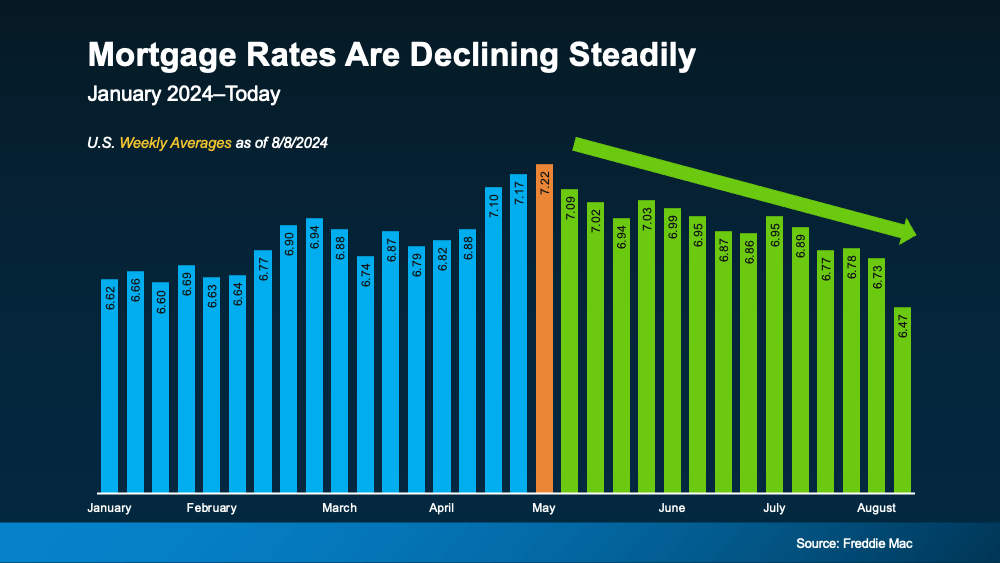 Mortgage rates have improved lately in part because of recent economic, employment, and inflation data. Moving forward, some rate volatility is to be expected. But if future economic data continues to show signs of cooling, experts say mortgage rates could keep going down.
Even a small drop can help you out. When rates decline, it's easier to afford the home you want because your monthly payment will be lower. Just don’t expect them to go back down to 3%.
The second big thing to think about is home prices. Nationally, they’re still going up this year, but not as fast as they did a couple of years ago. The graph below uses home price data from Case-Shiller to illustrate that point:
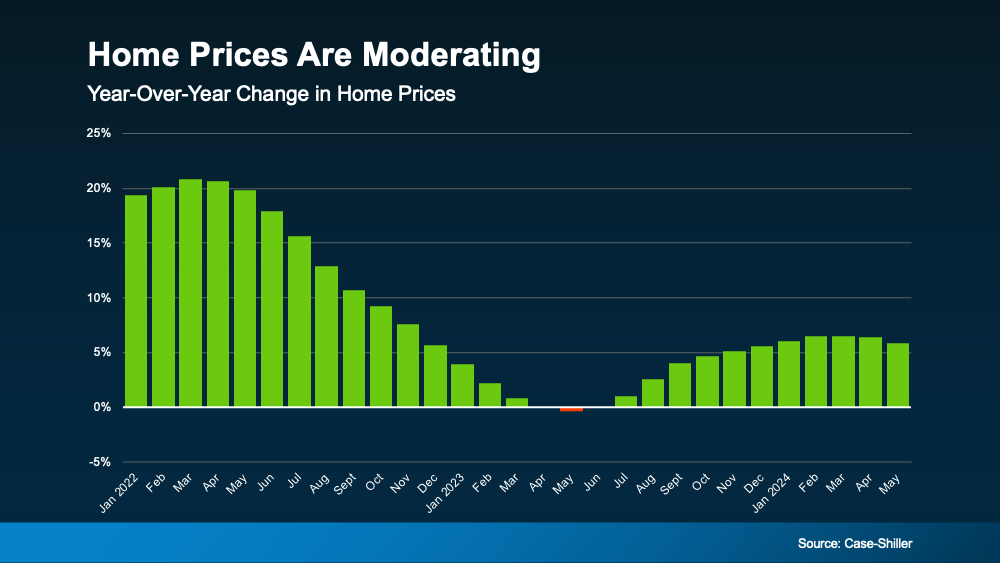 If you're thinking about buying a home, slower price growth is good news. Home prices went up a lot during the pandemic, making it hard for many people to buy. Now, with prices rising more slowly, buying a home may feel less out of reach. As Odeta Kushi, Deputy Chief Economist at First American, says:
“While housing affordability is low for potential first-time home buyers, slowing price appreciation and lower mortgage rates could help – so the dream of homeownership isn’t boarded up just yet.”
Another factor helping with affordability is rising wages. The graph below uses data from the Bureau of Labor Statistics (BLS) to show how wages have increased over time:
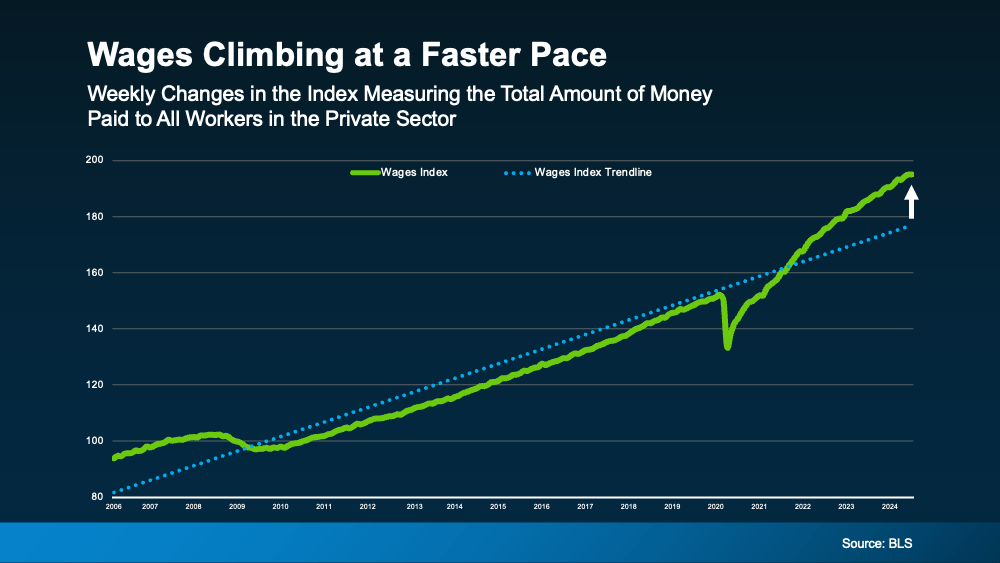 Look at the blue dotted line. It shows how wages usually go up in a typical year. On the right side of the graph, you'll see wages are rising even faster than normal right now – that's the green line.
This helps you because if your income increases, it's easier to afford a home. That’s because you won't have to spend as much of your paycheck on your monthly mortgage payment.
When you put all these factors together, you see mortgage rates are trending down, home prices are rising more slowly, and wages are going up faster than usual. Though affordability is still a challenge, these trends are early signs things might be starting to improve.

I moved to Crossville, TN in 1993, Became a real estate professional in 1998. I have spent the those years helping people in our beautiful area to buy and sell their homes. I had run a successful busi....
Inventory Is Making a Comeback in 2026After a long stretch where buyers were competing for too few homes, inventory has made a comeback over the past year. And depending on where you live, that;
Why So Many Homeowners Are Downsizing Right NowFor a growing number of homeowners, retirement isn’t some distant idea anymore. It’s starting to feel very real.According to Realtor.com
The U.S. Foreclosure Map You Need To SeeForeclosure headlines are making noise again – and they’re designed to stir up fear to get you to read them. But what the data shows is actually
The Truth About Where Home Prices Are HeadingThere are plenty of headlines these days calling for a housing market crash. But the truth is, they’re not telling the full story. Here’s&
 The data relating to real estate for sale on this Web Site comes from the IDX Program of the East Tennessee Realtors® Multiple Listing Service. © Copyright 2026 All rights reserved. This information is being provided for the consumers' personal, non-commercial use and may not be used for any purpose other than to identify prospective properties the consumers may be interested in purchasing. This information was updated September 22, 2026 7:17 AM UTC Some properties may subsequently have sold
and may no longer be available. The Real Estate Broker providing this data believes it to be correct, but advises interested parties to confirm the data before relying on it in a purchase decision.
Show More...
The data relating to real estate for sale on this Web Site comes from the IDX Program of the East Tennessee Realtors® Multiple Listing Service. © Copyright 2026 All rights reserved. This information is being provided for the consumers' personal, non-commercial use and may not be used for any purpose other than to identify prospective properties the consumers may be interested in purchasing. This information was updated September 22, 2026 7:17 AM UTC Some properties may subsequently have sold
and may no longer be available. The Real Estate Broker providing this data believes it to be correct, but advises interested parties to confirm the data before relying on it in a purchase decision.
Show More...
 Upper Cumberland Association of Realtors® All information deemed reliable but not guaranteed. All properties are subject to prior sale, change or withdrawal. Neither listing broker(s) or information provider(s) shall be responsible for any typographical errors, misinformation, misprints and shall be held totally harmless. Listing(s) information is provided for consumer's personal, non-commercial use and may not be used for any purpose other than to identify prospective properties consumers may
be interested in purchasing. The data relating to real estate for sale on this website comes in part from the Internet Data Exchange program of the Multiple Listing Service. Real estate listings held by brokerage firms other than Weichert, Realtors® - The Webb Agency - Fairfield Glade may be marked with the Internet Data Exchange logo and detailed information about those properties will include the name of the listing broker(s) when required by the MLS. Copyright ©2026 All rights reserved.
Last Updated: September 22, 2026 8:10 AM UTC
Show More...
Upper Cumberland Association of Realtors® All information deemed reliable but not guaranteed. All properties are subject to prior sale, change or withdrawal. Neither listing broker(s) or information provider(s) shall be responsible for any typographical errors, misinformation, misprints and shall be held totally harmless. Listing(s) information is provided for consumer's personal, non-commercial use and may not be used for any purpose other than to identify prospective properties consumers may
be interested in purchasing. The data relating to real estate for sale on this website comes in part from the Internet Data Exchange program of the Multiple Listing Service. Real estate listings held by brokerage firms other than Weichert, Realtors® - The Webb Agency - Fairfield Glade may be marked with the Internet Data Exchange logo and detailed information about those properties will include the name of the listing broker(s) when required by the MLS. Copyright ©2026 All rights reserved.
Last Updated: September 22, 2026 8:10 AM UTC
Show More...
